
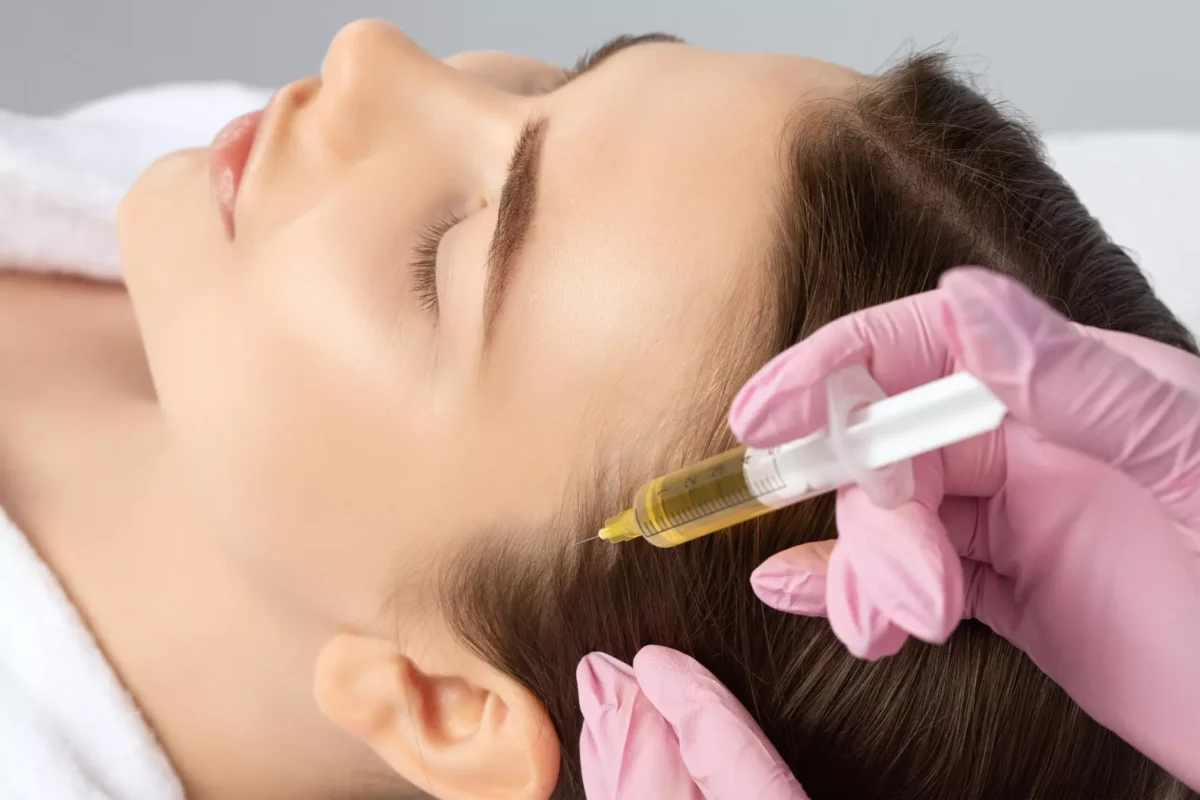
Hair thinning can cause a wider part of a receding hairline or increased hair shedding. PRP treatment uses platelets from your own blood to support hair growth. Results depend on the cause of hair loss and the condition of the follicles.
What Happens When Hair Follicles Stop Growing?
Hair grows through a natural cycle. Each follicle moves through growth, transition and resting phases. Hair eventually sheds and the follicle may begin a new growth cycle.
Some conditions can disturb this process. Hair may become thinner and the growth phase may become shorter. Over time certain follicles can produce finer strands.
Common Causes of Hair Thinning
Several factors can affect normal hair growth including:
- Genetics: Hereditary hair loss can gradually reduce hair density.
- Hormonal changes: Hormones can influence the hair growth cycle.
- Nutritional deficiencies: Low levels of certain nutrients may contribute to shedding.
- Stress: Physical or emotional stress can trigger temporary hair loss.
- Scalp conditions: Inflammation and some skin disorders can affect hair growth.
Key Points to Know:Identifying the cause is important before starting any treatment. Different types of hair loss require different approaches.
How PRP Helps With Hair Loss
This treatment uses a concentrated portion of the patient’s blood that contains platelets. A healthcare professional collects a small blood sample and processes it in a centrifuge.The process separates the platelet-rich portion from other blood components. The clinician then injects the prepared material into selected areas of the scalp.
Platelets contain growth factors that take part in the body’s natural repair processes. Researchers continue to study how these factors may influence hair follicles and hair growth.
Can PRP Help Inactive Hair Follicles?
PRP may improve hair thickness in people with early hair loss. Results vary and it may not help damaged or inactive follicles.
Follicles That May Still Respond
Some thinning follicles remain active even when they produce very fine hair. Treatment may help improve hair thickness in suitable cases.Early assessment can help determine whether this option may be useful. A dermatologist can examine the scalp and evaluate the pattern of hair loss.
Follicles That May Not Respond
Follicles destroyed by certain scarring conditions may not grow hair again. Long-standing hair loss can also limit treatment results.In these situations a doctor may recommend other options. The right approach depends on the diagnosis and the extent of hair loss.
Signs of Hair Thinning
Changes in hair density can develop gradually. Paying attention to these changes can help you seek advice before the problem progresses.
Consider a professional assessment if you notice:
- A widening part or a thinner ponytail.
- Gradual thinning around the crown.
- A receding hairline.
- Increased shedding that continues for several weeks.
- Areas where hair growth appears weaker than before.
Key Points to Know:Sudden or patchy hair loss needs medical evaluation. It may indicate a condition that requires specific treatment rather than a cosmetic procedure.
Before Starting Treatment
A consultation helps the doctor understand your hair concerns and medical history. The assessment may include an examination of your scalp and hair density.Your doctor may also ask about family history, recent illness, medication use, diet and stress. Blood tests may be necessary when symptoms suggest a nutritional deficiency or another underlying condition.
Creating a Suitable Treatment Plan
The doctor considers your diagnosis, hair loss pattern and treatment goals. They may discuss other treatments alongside injectable procedures.People researching Best PRP Treatment in Lahore should check the provider’s qualifications, hygiene practices and approach to patient assessment. A proper consultation should include realistic expectations and a clear explanation of possible risks.
Number of Treatment Sessions
Treatment plans vary from person to person. Some patients receive an initial series of sessions followed by maintenance appointments.The number and timing of sessions depend on the clinician’s recommendation. Hair growth also takes time so changes may not appear immediately.
When Results May Become Visible
Some patients notice changes in hair shedding or thickness over several months. Others may see limited improvement.Photographs taken before treatment can help track changes over time. Follow-up appointments also allow the doctor to assess progress and adjust the plan if needed.
Side Effects
PRP may cause mild pain, redness, swelling, or bruising. Results vary so discuss possible risks and expected outcomes with a qualified doctor before treatment.
Keeping Hair Healthy After Treatment
Daily habits can support general hair health although they cannot replace medical care when an underlying condition causes hair loss.
Helpful steps include:
- Eat a balanced diet with enough protein and essential nutrients.
- Avoid hairstyles that pull tightly on the hair.
- Use gentle hair care products.
- Manage stress and maintain regular sleep.
- Follow your clinician’s aftercare instructions.
Key Points to Know:Avoid taking supplements without advice if you do not know whether you have a deficiency. Excess amounts of certain nutrients can also cause health problems.
Getting the Right Hair Loss Treatment
Hair loss treatment depends on its cause and the condition of the follicles. At Institute Cosmetique patients can discuss suitable treatment options with a professional.
Sum up
Hair follicles do not always stop working completely when hair becomes thin. Some may still produce fine strands and respond to suitable treatment. Others may have permanent damage that limits regrowth.Professional assessment helps determine the cause of hair loss and the most appropriate next step. Understanding the benefits and limitations of each option can help you make a well-informed decision.